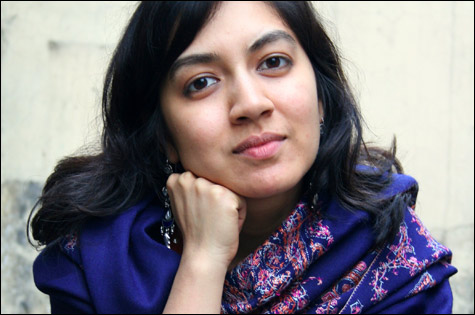
RECENT HISTORY: Tahmima Anam’s eagerly awaited debut novel is set during Bangladesh’s 1971 battle for independence. |
Esteemed fiction writers, young stars, the Civil War, the ’60s, and the morass of contemporary geopolitics — it’s all here for reading during winter’s long, dark nights.
FICTION
GERALDINE BROOKS wastes no time in the new year, following up her 2006 Pulitzer-winning March with the January 1 release of People of the Book (Viking), which invents a dramatic history for the legendary Sarajevo Haggadah. BERNHARD SCHLINK’s latest is a poignant Homecoming (Pantheon, January 8), though protagonist Peter Debauer’s hunt for a father who vanished during World War II is less closure than rude awakening. The protagonist of LYDIA MILLET’s How the Dead Dream (Counterpoint, January 25) also has a rude awakening: wealth-obsessed real-estate developer T. is reformed by the novel experience of love, even breaking into zoos to sleep companionably with the wolves.
Those same lupine creatures roam free in JIANG RONG’s Wolf Totem (Penguin Press, March 31), currently the most popular reading in China after Mao’s little red book and a memorial to the bond between nomad and Canis lupus in Inner Mongolia, where the pseudonymous author volunteered during the Great Leap Forward. Hapless Briton Chris Carver, a ’60s radical, also volunteered for the revolution way back when, but in HARI KUNZRU’s My Revolutions (Dutton, January 24), he’s lost heart and has been hiding for decades as Michael Frame — a cover that is about to be blown. Stateside in the ’70s, seven-year-old Che doesn’t blow his Weatherman mother’s cover — he hardly knows her — but he does end up on the run with hapless Dial, who’s been drafted by Che’s mom to spirit him away from grandma in Booker Prize winner PETER CAREY’s His Illegal Self (Knopf, February 8).
TAHMIMA ANAM is already turning heads with her debut, A Golden Age (HarperCollins, January 8), which is set during Bangladesh’s 1971 battle for independence. MANIL SURI, who had his own big debut with The Death of Vishnu in 2001, travels back to 1960s Bombay for a tale of obsessive love in The Age of Shiva (Norton, January 28). CHITRA BANERJEE DIVAKARUNI isn’t content to skip back a few decades; with The Palace of Illusions (Doubleday, February 12), she retells the Mahabharat from the perspective of Panchaali, wife to all five of the Sanskrit epic’s heroic Pandava brothers.
Recently shortlisted for the 2007 Costa Book Awards (formerly the Whitbread Prize), A.L. KENNEDY’s Day (Knopf, January 8) features a former RAF tailgunner whose work as an extra on the set of a POW film proves unexpectedly illuminating. The moral burdens of war also surface in MICHELINE AHARONIAN MARCOM’s Draining the Sea (Riverhead, March 13) and ARTURO PÉREZ-REVERTE’s The Painter of Battles (Random, January 8). In the former, a nameless narrator anguishes over his possible complicity in the death of a Guatemalan woman he loved. In the latter, a war-photographer-turned-painter must reconsider past actions when a soldier his lens once captured arrives at his hideaway and calmly promises to kill him.
