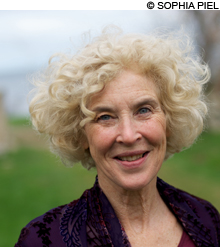
IMMERSIVE FICTION Author Terry Farish has said she writes “to try to make sense of what I care most deeply about.” |
I wish every teenager — nay, every person — in Portland could read Terry Farish's new book, The Good Braider (Marshall Cavendish/Amazon Children's Publishing). Conceived over the course of 10 years, and drawing on ethnographic research conducted in local kitchens, living rooms, and Kennedy Park, this young-adult novel is a searing, stark, and ultimately hopeful account of what it means to be a young woman coming of age in a complicated world.Farish will celebrate the launch of her book — with the help of South Sudanese-American musician OD Bonny, whose new album, Kwo I Lobo Tek, is an infectious pop-hip-hop carousel ride — this week at the University of Southern Maine.
The Good Braider tells the story of Viola, who at the start of the book is 15 years old and living in war-torn Sudan. In her hometown of Juba, where "I tuck my skirt around my ankles so the Muslim soldiers do not believe I am a crime against God," she is raped by one of those soldiers. She witnesses murder and extreme poverty. When she, her mother, and her brother finally flee, Viola leaves behind her gentle grandmother and everything she knows; tragically, her brother, Francis, drinks "bad water" and dies during the journey. They end up in a refugee camp in Cairo, Egypt, where Viola celebrates her 16th and 17th birthdays. Finally, she and her mother receive a "blue card" from the United Nations — i.e., eligibility for resettlement in America. They move to Portland, where Viola begins the challenging transition into American life.
"I have long been very interested in this process of moving from war to the US," Farish tells me on the phone from Portsmouth, where she lives today. Having worked with immigrants and refugees from Sudan, Vietnam, and Cambodia (her 1995 book, If the Tiger, is about a girl who survives the Pol Pot regime), Farish found that many new Americans exist in a limbo-zone between a foreign past and an unfamiliar present. "They are creating something brand new."
Farish saw that metamorphosis first-hand during her time in Portland, where she was invited into the home of one Sudanese boy to taste a native dish and subsequently formed deep connections with the Sudanese community here.
"I was with them as they tried to sort out the money, sort out the rent, get jobs to buy the food, [and grapple with] this issue with dating, which caused such conflict within families," she recalls, referring to the widespread taboo of socializing with non-immigrant peers. "I was able to observe all these interactions, and at the same time I was reading widely." In addition to book research, Farish also spent time in Kenya, Sudan's safer neighbor to the south, where they eat similar foods and have similar cultural practices.
In an effort to translate the refugee experience into literature, she began working on a piece of creative non-fiction: short chapters, often in first person, sort of transcribed oral histories. "At one point, with vast amounts of work done on this non-fiction piece, I put it all away," she says. "I put all my notes away, and all my research from Kenya, and I had another idea of how to tell this story. It was by putting everything away that I could enter the story myself."
