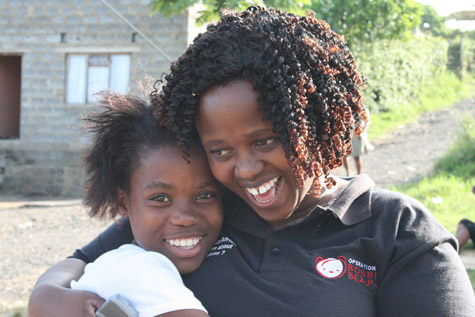
FINDING HOPE Fighting abuse, and helping its victims, in South Africa. |
Operation Bobbi Bear is a non-governmental organization in Durban, South Africa, devoted to finding care and foster homes for children who are abused and abandoned. Nearly all of the staff members are women, some victims of childhood or marital abuse themselves, and their caseload reveals an epidemic of suffering among the region's young girls. In the ten weeks director Kim Longinotto spent with her film's titular "rough Aunties" at Bobbi Bear, she documented the aftermath of near-constant cases of rape and incest (some of the victims are barely older than infants), along with gruesome house invasions and instances of children dumped on roadsides.
Rough Aunties is, to be sure, a harrowing and at times deeply upsetting film, but what makes it simultaneously one of the most emotionally taxing and genuinely inspiring documentaries I've seen is the grit and determination of the women behind Bobbi Bear, and Longinotto's sensitive yet emboldened portrayal of their life's work. For her efforts, Longinotto received the True Vision Award at last year's True/False Film Festival in Columbia, Missouri; Rough Aunties also won the World Cinema Jury Prize for Documentary at the 2009 Sundance Film Festival. It screens for free at SPACE Gallery on March 8, in honor of International Women's Day.
All of Longinotto's films (which include Divorce Iranian Style and Sisters in Law) are shot with a two-person crew (the director and a sound engineer) on consumer-grade video. In Rough Aunties, the landscape is initially drab and cloudy, but the reds and pinks of native wardrobes begin to pop, and the varying hues of green are lush. The film, too, begins on a dreary note, as a young girl describes being raped by a teenage boy. The Auntie assigned to her, Mildred, gets the quiet victim to open up by handing her a stuffed bear; the girl describes the acts committed on her by applying marker and Band-aids to various parts of the animal.
The atmosphere becomes more dynamic when some of the Aunties join the police in a raid on the accused rapist. When they enter the home of the suspect, the mother of the accused shouts that the girl's father must have raped her (this proves plausible in other cases), that her son couldn't have done it. Mildred angrily snaps back in Zulu, "You don't talk like a parent, old woman."
The societal problems Longinotto chooses to address are institutional, both within the context of the country's inept social-welfare system (a number of children seen or mentioned are simply sent back to the relatives that abused them when they seek help) and within the familial hierarchy. As Jackie, the founder of Bobbi Bear, pithily puts it at one point: Men "always want women barefoot, pregnant, and at the kitchen sink. We know this;" another staff member says men are "hopeless, like babies."
