 |
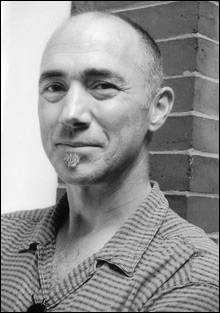
Lake Baikal fills a fracture in the surface of Siberia that’s 25 million years old, 395 miles long, and a mile deep. It’s the world’s largest, deepest, most ancient body of fresh water, and a mythic spot in the minds of many Russians — for its scale, yes, but also for the lake’s mysterious, now endangered, ability to keep itself pristine, thanks to a unique self-cleansing ecosystem. Peter Thomson, founding editor and producer of the Somerville-based NPR environmental news show Living on Earth, journeyed to Lake Baikal from Boston, via trains and boats and cars, after his marriage crumbled. Some people join a gym after a divorce; Thomson, 48 years old, and currently living in Jamaica Plain, embarked on a trip around the world toward this great lake — “God’s own reservoir,” as he terms it. His new book, Sacred Sea: A Journey to Lake Baikal (Oxford University Press, 320 pages, $29.95), documents his trip in a blend of environmental journalism, travel narrative, and memoir. It’s a portrait of a place, its people, and its problems. It’s also an honest look at how far we have to go to get home again.Sitting at Newbury Street’s Trident Café recently, Thomson, who’s got an ageless look about him — a soul patch and a spark behind his eyes masks any world-weariness — talks about the process of writing the book, the trip itself, how our actions reverberate, and how to tell a narrative. “With a big story,” he says, such as something on the scale of Baikal, “what I learned to do is to humanize it, to distill it down to a core essence around which you can build the bigger story.” And so it is in Sacred Sea: straight reporting about mini-shrimp and pollutants and the people who exist on Baikal’s shores alternate with personal details of Thomson’s marriage and family, as well as his reactions to the place (on entering the waters for the first time: “the world is suddenly black and silent, as black and silent as space, and you’re floating weightlessly like in space too . . . except you don’t have a suit on, in fact there’s nothing at all between you and this hostile new environment”).
Regardless of whether the tale is large or small, “there’s nothing in the environmental arena that’s unique to a particular place,” says Thomson. Which means that writing about the faraway wintry exileland of Siberia can resonate here. The mentality exists in Russia that Baikal can take anything that gets thrown at it, that toxic paper factories and a growing local population can’t harm it, that its ability to cleanse itself is bigger and more powerful than any potential human threat. Similarly, in the United States, the perception exists that “there’s always more,” says Thomson. “If paradise gets destroyed, we move and start over. We have this idea as a country of our limitless ability to build and build and build. And Siberia has the same notion of the frontier, of the infinite ability to expand.”
 Related
:
The Victory Day ‘confusement’, The parent trap, For real change, the chattering classes need to take a fall, More 
- The Victory Day ‘confusement’
The late, great Professor Longhair used to describe a complicated situation as “the time when all the confusement comes in.”
- The parent trap
Coraline pushes familiar buttons
- For real change, the chattering classes need to take a fall
The key word of the moment in America is “change.”
- A wild, wild, wide-open race
Here are five Big Things about the recent primary election that were missed or underemphasized by the “straight” press.
- The war games
The Cry of the Reed seems torn from some particularly gruesome headlines: kidnapping, beheading, such stuff as Daniel Pearl’s final dreams were made on.
- Following the evidence
“CSI: The Experience,” like a B-movie, is best if you don’t think too hard about it.
- No plain Jane
Every generation leaves its fingerprints on Jane Eyre .
- Ready to rumble!
Rather depressing, one imagines, to catch a spinning backfist to the head, particularly when it’s the very thing you’ve been determined to avoid since the last time you caught a spinning backfist to the head.
- Kitchen-sink ‘Summer’
You wouldn’t think a painting exhibit of ships and still lifes, landscapes and portraits, primitives and abstractions representing 82 artists and spanning 148 years would hold together in any discernible way.
- Ralph Hamilton
My lovable, impossible friend of more than 30 years, the artist Ralph Hamilton, died on February 19, of complications from diabetes. He was only 59. It’s a very sad loss. He was one of Boston’s most original and searching painters and had been doing some of his most ambitious and moving work.
- Summer Sparklers and Sashimi
If you missed Victoria Abbott Riccardi’s recent sold-out appearance at Fugakyu (1280 Beacon Street, Brookline), fret not.
- Less

Topics:
Books
, Culture and Lifestyle, Media, National Public Radio Inc., More
, Culture and Lifestyle, Media, National Public Radio Inc., Books, Relationships, Marriage, Less
