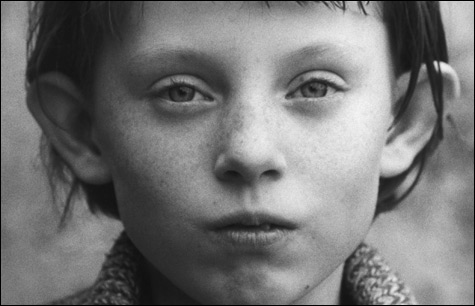
ENTHRALLING FOR SEVEN HOURS? Can’t argue with Susan Sontag. |
| Sátántangó | Directed by Béla Tarr | Written by Béla Tarr based on the novel by László Krasznahorkai | With Mihály Vig, Putyi Horváth, Peter Berling, László Lugossy, Éva Almássy Albert, Janós Derszi, Irén Szajki, Alfréd Járai, Miklós Székely, Erzsébet Gaál, and Erika Bók | Hungarian | 435 minutes | Facets Video | $79.95 |
Since its release in 1994, Hungarian auteur Béla Tarr’s 435-minute sui generis masterpiece Sátántangó (“Satan’s Tango”) has had the top critics grasping for superlatives. The late Susan Sontag exclaimed, “Devastating, enthralling for every minute of its seven hours.” I never saw the film on the big screen, but after watching Facets Video’s shimmering, meticulous DVD version (the process took so long and was so laborious, they even made a DVD about making the DVD), I’d have to agree. Its opening scene — a 10-minute shot of the mud-filled yard of a dilapidated Hungarian collective farm that’s empty until some cattle make their inquisitive entrance — might sound forbidding. In fact, the film transfixes — witty, complex, and layered, this is a radiant and weighted detailing of a world. Only once did I think I might have to tune out. That was about halfway through, in a long sequence in which a feral little girl tortures a cat, and it wasn’t because I was bored.

Not that nothing happens in Sátántangó. Although the enigmatic Tarr has said that he hates stories, the film is filled with narrative bagatelles, and its overriding storyline, spread over a dozen chapters (or movements or steps), stops and starts again from new points of view. In this Beckett-like fable, some of the remaining inhabitants of the collective have hoarded some cash and are planning to divide it among themselves and leave. But the uncanny Irimiás (Mihály Vig, who also composed the film’s eerie music), a dreamy con man prone to pronouncements of gnomic nihilism, has returned after being reported dead. He says he has a plan to redeem these losers from their fetid futility, but it will cost them.
A messianic parable? An allegory about the death of the Marxist dream? Maybe so, but also much more and perhaps much less. Much of the film finds the camera following figures walking endlessly in the rain through trash-blown streets or toward empty horizons. (The eternal dinner guests in Luis Buñuel’s The Discreet Charm of the Bourgeoisie come to mind.) At the hub of these repeated and unresolved movements revolves the tango of the title, a drunken dance that a child watches through the window of a tavern and that leads to an appalling event, a vision that both vindicates innocence and blasphemes it.
Occasionally a character will try to break from the pattern, like the drunk who relates over and over an anecdote about his meeting Irimiás in a bar where there was talk of gunpowder and the waitresses jumped like grasshoppers and then he had a revelation! He knew exactly what was going on! But the story breaks into fragments and never reassembles, and we never discover what that revelation was.
My bet is that it’s the truth about the doctor (Peter Berling), a crapulous hulk nearly paralyzed by drink who spies on the other characters and haltingly writes out their speculated dossiers. Maybe their lives are only the invention of his imagination, a desperate attempt to fill the void between one drink and the next, one labored breath and another. He stirs from his post only when the brandy runs out (the result is disastrous), or when something ineffable calls from outside, leading him to a roofless church (think of the one from Andrei Tarkovsky’s Nostalgia) where a crazed monk pounds on a bell, shouting, “The Turks are coming!” And then Satan’s tango ends, only to begin again.
