 |
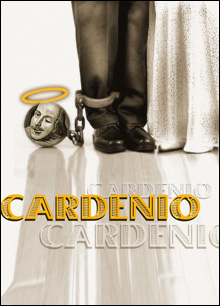
What Shakespeare wrote and what he didn’t — even without bringing the Earl of Oxford into it — is one of literature’s most enduring and enjoyable mysteries, and this week it’s front and center as the American Repertory Theatre opens Cardenio, a work by playwright Charles Mee and Harvard Shakespeare scholar Stephen Greenblatt that’s inspired by “Shakespeare’s Cardenio.” That’s quite a feat, of course, since we don’t possess Shakespeare’s Cardenio. We have plays in the First Folio that others are thought to have had a hand in: Titus Andronicus, the Henry VI trio, Macbeth, Timon of Athens, Henry VIII. We have plays not in the First Folio that Shakespeare is thought to have had a hand in — notably Pericles and Two Noble Kinsmen. We have plays — lots of them — that were later attributed to Shakespeare but no one believes he wrote, like The Birth of Merlin and Sir John Oldcastle. And we have plays attributed to Shakespeare that haven’t survived. No one knows whether Love’s Labour’s Won is a lost sequel to Love’s Labour’s Lost or an alternate name for another play (say, Much Ado About Nothing). And then there’s Cardenio, about which we know only that the subject matter would have come from a story in part one of Cervantes’s Don Quixote and that the King’s Men — Shakespeare’s company — presented the play at court in 1613. Here’s everything you didn’t know you wanted to know about Cardenio. . .What does Cardenio do in Don Quixote?
He tries to wed the beautiful Luscinda, but before he can get his father to ask her father for her hand, his father sends him off to be the companion of Don Fernando, the second son of Duke Ricardo. When Cardenio tells Don Fernando of his love for Luscinda, Don Fernando undertakes to ask her father’s consent on Cardenio’s behalf, but in fact he obtains it on his own behalf. When Cardenio learns what’s happened, he goes mad and runs away, eventually stumbling on Don Quixote and Sancho Panza and telling his story. They then come upon a peasant youth who turns out to be a beautiful village girl, Dorotea, whom Don Fernando has seduced. Everyone proceeds to an inn, where Don Quixote does battle with some feisty red-wine skins, and in due course Don Fernando and Luscinda turn up, not quite married — she fainted at the ceremony, he fled, she took refuge in a monastery, he abducted her from it. Cardenio and Luscinda are reunited and Don Fernando is prevailed upon to abandon his claim to Luscinda and honor the promise he made to marry Dorotea.
There’s also a subplot: while they’re all at the inn, the landlord brings out some books from his trunk, and they hear “La novela del curioso impertinente,” in which rich but not overbright Florentine nobleman Anselmo wonders whether his lovely wife, Camila, is as virtuous as she seems and determines to test her by asking his best (and smarter) friend, Lotario, to pretend to woo her. Lotario raises many objections before giving in; eventually, of course, the pretended wooing becomes real, and it all ends as badly as you’d imagine.

How does this become a play in Shakespeare’s time?
In October of 1611, an untitled play was submitted to King James’s censor, George Buc, for approval; he passed it, with “the reformations,” for public acting, dubbing it the “second Maydens tragedy.” This play, which most contemporary scholars attribute to Thomas Middleton, has a plot that vaguely resembles that of the Cardenio tale in Don Quixote — with completely different names — and a pretty accurate subplot version of “El curioso impertinente,” with characters named Anselmus, Votarius, and “Wife.”
So is this play Cardenio?
Well, that’s the question. There’s no character in it called Cardenio, so you wouldn’t think so. But it has its own mystery: Thomas Shelton’s English translation of part one of Don Quixote didn’t come out till 1612. So either the Second Maiden’s Tragedy playwright(s) could read Spanish or he/they had access to Cervantes’s source.
This is confusing. Is there a play that is called Cardenio?
Yes. An entry in the Revels Accounts for 1613 states that John Heminges was paid for a play the King’s Men presented at court on May 20 called Cardenno, and again for a play presented June 8 called Cardenna. Given the popularity of Shelton’s translation — and the vagaries of spelling in Shakespeare’s time — it’s reasonable to assume that these references are to a single play and that the title character is Cervantes’s Cardenio.
Were those the first performances?
We can’t say. We don’t know whether Cardenio was ever presented in a public playhouse. We just know there were these two performances.
So what happened to the play?
Well, we don’t have it. The Globe Theatre burned down on June 29, 1613, when, during the King’s Men’s production of Henry VIII, a shot from a cannon saluting the entrance of the king caused the theater to catch fire. The playbook may have burned up there, though you might think that the actors, who would have had their individual parts in their lodgings, could have reconstructed it.
